
Statins are marvelous drugs. They are also misunderstood, overtrusted, and occasionally treated like tiny orange seatbelts for the human heart.
Lower your cholesterol, they say, and you lower your risk. Which is true – as far as it goes. The trouble is that cardiovascular disease does not go very far in straight lines.
Statins are good at one thing. We keep asking them to do everything.
The Great Cholesterol Fixation
Somewhere along the way, cholesterol became the villain in a very American morality play. LDL was cast as the bad guy, arteries as innocent victims, and statins as the heroic sheriff riding into town with a badge labeled “HMG-CoA reductase inhibition.”
And for a while, the story worked beautifully.
Lower LDL, fewer heart attacks, most notably in people who already had heart attacks. This is not propaganda, it’s data. Statins shine in secondary prevention. When the house has already caught fire, removing the accelerant helps.
But then we got ambitious. We began prescribing statins to people who were merely adjacent to risk. A little cholesterol here, a little family history there, a birthday that ended in zero. Before long, statins weren’t treating disease; they were managing potential futures. And potential futures are notoriously hard to predict.
LDL Is Not a Disease, It’s a Character Actor
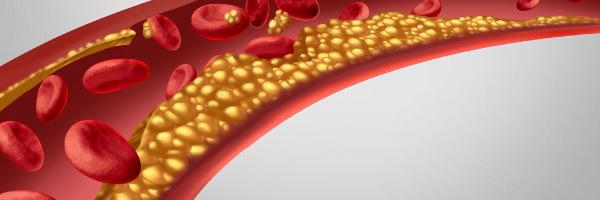
LDL cholesterol participates in atherosclerosis, yes. But it is not the disease itself. Atherosclerosis is a long, slow, bureaucratic process involving inflammation, immune signaling, endothelial dysfunction, oxidative stress, insulin resistance, and a parade of biological characters who never appear on standard lipid panels. I recommend getting an advanced lipid panel that sheds much more light on the plaque formation process.
LDL is not the mastermind. It’s a henchman.
Lowering LDL reduces risk statistically, but it does not magically restore arterial peace. Plenty of people suffer heart attacks with “normal” cholesterol. A 2009 study from UCLA, published in the American Heart Journal, showed that about 50% of people having heart attacks had low risk LDL while as many as 75% didn’t even present in the high risk LDL range. Plenty of others carry high LDL for decades and never miss a beat.
The arteries, it turns out, care about context.
Relative Risk is The Art of Making Small Things Sound Big
Statins are often praised for reducing cardiovascular events by 25–30%. Which sounds fantastic until you realize that this is relative risk, not absolute risk.
If your absolute risk was low to begin with, that impressive percentage may translate into a very small real-world difference. In many primary-prevention scenarios, dozens or even hundreds of people must take statins for years to prevent a single event.
This is not a condemnation. It is a math problem. Statins work, but they work best when the baseline risk is already high. Otherwise, they’re more like a seat cushion than an airbag.
The Metabolic Elephant in the Room
Modern cardiovascular disease does not arise from cholesterol alone. It arises from a metabolic environment gone sideways: insulin resistance, visceral fat, chronic inflammation, disrupted sleep, sedentary behavior, and diets engineered more for shelf life than cellular coherence.
Statins do not fix any of this.
They do not improve insulin sensitivity. They do not repair mitochondrial function. They do not calm the immune system’s low-grade panic. In fact, they slightly increase the risk of new-onset diabetes in some people, a detail usually mentioned quietly, like an apology at the end of a long speech.
Statins treat a marker, not the terrain.
Inflammation is The Thing That Actually Breaks the Plaque
If cholesterol were the whole story, plaques would behave politely. They would grow slowly, predictably, and without drama. They do not.
Heart attacks are not caused by gradual narrowing alone. They are caused by plaque rupture, and plaque rupture is driven by inflammation. Statins dampen inflammation a bit, but not consistently and not completely.
Other therapies that reduce inflammation, without touching LDL, have also reduced cardiovascular events. This should have been a clue that cholesterol is only part of the plot. My article Artery Health outlines a few of the supplements we use as part of the plaque reversal. Notice none of these target the lowering of LDL, instead combating inflammation and LDL-oxidation.
But cholesterol is easy to measure. Inflammation is messier. And medicine, like most institutions, prefers tidy villains.
Mitochondria Don’t Read Package Inserts
One of statins’ least appreciated limitations lives deep inside your cells, where the lights are kept on by mitochondria.
The cholesterol pathway shares machinery with the production of coenzyme Q10, a key player in cellular energy. Statins interfere with this pathway, which helps explain why some people develop muscle pain, weakness, fatigue, or exercise intolerance.
For some, this is dramatic. For others, it’s subtle, like a sense that the body no longer quite trusts movement. Not everyone experiences this. But enough people do that dismissing it entirely requires either exceptional optimism or selective hearing.
The Brain Is Mostly Cholesterol (Awkward Detail)
Cholesterol is not just artery wallpaper. It is structural, functional, and essential, especially in the brain. Synapses are cholesterol-rich. Neurons depend on it.
Large trials haven’t proven that statins cause major cognitive harm, but real-world reports of memory glitches and brain fog persist. The evidence is mixed, but the conversation often stops too early, as if uncertainty itself were an inconvenience.
The brain, like the heart, does not enjoy being oversimplified
The Greatest Limitation is False Reassurance
The most important limit of statins isn’t biochemical. It’s psychological.
Statins can create the illusion that risk has been “handled.” LDL drops. The chart turns green. The deeper questions, with diet quality, movement, sleep, stress, and metabolic health quietly exit the room. This is how prevention becomes paperwork.
Statins are added. Lifestyle conversations are postponed. The body continues doing what it was doing, only now with better numbers. Numbers are comforting. Physiology is not.
Where Statins Belong and Where They Don’t
Statins make sense
- After heart attacks
- In high-risk individuals with clear atherosclerosis
- When absolute risk reduction justifies lifelong medication
They are less convincing
- As reflex prescriptions for mild LDL elevations
- As substitutes for metabolic repair
- As lifetime defaults without reassessment
A tool is only as wise as the hand that uses it.
The Takeaway
Statins are not villains. They are not saviors. They are highly effective at doing one specific thing in a very complicated system.
They lower cholesterol. They reduce risk. They do not restore health.
Cardiovascular disease is not a cholesterol problem. It is a systems problem – a slow accumulation of biological compromises that no single drug can reverse.
Statins can tilt the odds. They cannot rewrite the story.
But isn’t it more interesting when we look upstream and ask why the river is flooding in the first place?
Statins are a chapter. They are not the book.
Author
Scott Rollins, MD, is Board Certified with the American Board of Family Practice and the American Board of Anti-Aging and Regenerative Medicine. He specializes in bioidentical hormone replacement for men and women, thyroid and adrenal disorders, fibromyalgia and other complex medical conditions. He is founder and medical director of the Integrative Medicine Center of Western Colorado (www.imcwc.com) and Bellezza Laser Aesthetics (www.bellezzalaser.com). Call (970) 245-6911 for an appointment or more information.
