
A Slightly Irreverent Field Guide to Cellular Energy
If you zoomed in far enough, past skin, past muscle, past internal organs and all the way into your cells, you’d find a city of tiny power plants humming along in the dark. These are mitochondria. They do not care about your emails. They do not care about your cholesterol score. They only care about one thing: ATP
ATP (adenosine triphosphate) is the spendable currency of biology. It pays for muscle contraction, neurotransmitters, immune surveillance, hormone synthesis, and the quiet dignity of staying alive. When ATP flows, you feel capable. When it falters, you feel like someone unplugged your soul.
Let’s step inside the machine.
The Engine Room Where Mitochondria Make Energy
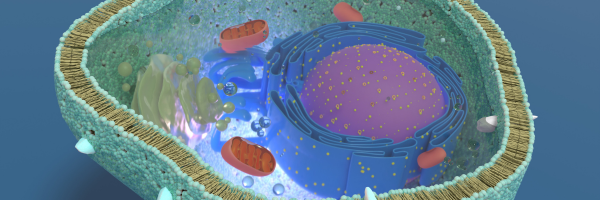
Mitochondria sit inside your cells like coiled red commas. Inside them lives the electron transport chain – a row of protein complexes embedded in a membrane folded like an accordion.
Here’s the elegant simplicity of the system
- You eat food.
- Food becomes electrons.
- Electrons move down the chain.
- Protons are pumped.
- ATP synthase spins like a turbine.
- ATP is born.
It’s hydroelectric power on a microscopic scale. But electrons don’t walk themselves to the turbine. They need couriers. Enter NAD and CoQ – the delivery drivers of life.
The Electron Taxi Service called NAD
NAD⁺ (nicotinamide adenine dinucleotide) is a redox molecule. That means it carries electrons – quietly, reliably, like a well-trained Labrador. We get NAD from foods rich in niacin or tryptophan.
During glycolysis and the Krebs cycle, NAD⁺ accepts electrons and becomes NADH. NADH then delivers those electrons to Complex I of the electron transport chain. From there, the electrons flow downhill energetically, powering proton pumps and eventually spinning ATP synthase.
If NAD levels drop, the whole enterprise slows. Why does NAD decline with age?
- Chronic inflammation activates CD38, a NAD consumer.
- DNA repair enzymes burn through NAD.
- Oxidative stress increases demand.
Low NAD doesn’t feel like drama. It feels like subtle dimming. Slower recovery. Less metabolic flexibility. A battery that no longer charges fully.
Supplements like NR (nicotinamide riboside) and NMN (nicotinamide mononucleotide) attempt to raise NAD pools. In humans, they modestly improve mitochondrial gene expression and sometimes endurance markers. But they are tune-ups, not miracles.
Exercise, by the way, raises NAD far more robustly than capsules ever will.
The CoQ Conveyor Belt Between Engines
If NAD is the taxi driver, Coenzyme Q10, also known as ubiquinol, is the conveyor belt inside the factory. CoQ is synthesized internally.
CoQ sits in the inner mitochondrial membrane and shuttles electrons from Complex I and II to Complex III. Without CoQ, electrons bottleneck. Traffic backs up. Reactive oxygen species leak like sparks from a frayed wire.
Your body makes CoQ naturally, unless you’re on statins. Statins inhibit the mevalonate pathway, which is also how CoQ is synthesized. That’s why statin-associated muscle fatigue sometimes improves with CoQ supplementation. In heart failure trials, CoQ has shown measurable benefit. In healthy adults, the effect is subtler unless you are deficient.
CoQ doesn’t increase horsepower. It improves transmission efficiency.
Urolithin A, The Janitor of Broken Power Plants
Now we meet urolithin A – not a fuel, not a courier, but a custodian.
You don’t eat urolithin A directly. You eat certain foods, such pomegranate or walnuts. Your gut microbes convert ellagitannins into urolithin A – if you’re lucky and harbor the right bacteria.
Urolithin A stimulates mitophagy – the selective removal of damaged mitochondria. This matters because old mitochondria:
- Leak electrons
- Produce excess reactive oxygen species
- Generate less ATP
- Make you tired in a way that sleep does not fix
Mitophagy clears out the rusted engines. Miochondrial biogenesis builds fresh ones.
Human trials in older adults show modest improvements in muscle endurance at doses around 500 to 1,000 mg per day. It’s not a lightning bolt. It’s spring cleaning.
Resistance training, however, is a full renovation.
Methylene Blue, The Rebel Wire
And then there is methylene blue – the eccentric uncle of mitochondrial biochemistry.
Unlike NAD or CoQ, methylene blue can bypass part of the electron transport chain. It accepts electrons from NADH and donates them downstream, effectively circumventing a sluggish Complex I.
At low doses, roughly 0.5 to 2 mg per kilogram, it can
- Improve mitochondrial respiration efficiency
- Reduce certain reactive oxygen species
- Increase cerebral metabolic activity
At higher doses, it becomes pro-oxidant. It can raise blood pressure. It can trigger serotonin syndrome if combined with certain meds such as SSRIs. It turns urine blue, which is the least interesting side effect.
Methylene blue is pharmacologic. Not nutritional. It installs a bypass wire in your electrical grid. That can help – or it can fry something if used carelessly.
Clinical Applications in Mitochondrial Dysfunction
In conditions such as long COVID, chronic fatigue syndromes, post-viral neurologic instability, and toxin-related inflammatory states, we often see patterns of impaired cellular energetics. Patients describe this as post-exertional crashes, brain fog, poor recovery, or a persistent “battery depletion” that rest alone does not correct.
In carefully selected cases, we use a layered mitochondrial support strategy.
IV NAD is used to replenish redox substrate availability when inflammatory demand and oxidative stress have depleted intracellular pools. By restoring NAD-dependent electron flow into the electron transport chain, we aim to improve efficiency rather than artificially stimulate energy production. Patients frequently report improved cognitive clarity and greater recovery stability rather than a surge of stimulation.
In select situations, low-dose methylene blue may be incorporated under close supervision. At physiologic doses, it can act as an alternative electron carrier, supporting mitochondrial respiration efficiency and reducing electron leakage. This is a pharmacologic intervention and requires appropriate screening for contraindications and medication interactions.
These therapies are paired with foundational oral support such as CoQ10 for electron transport efficiency, urolithin A for mitochondrial quality control, magnesium for ATP binding, and omega-3 fatty acids for membrane stability. Just as importantly, we address iron sufficiency, thyroid function, sleep architecture, glycemic stability, and progressive movement therapy.
The goal is not stimulation. It is restoration of mitochondrial resilience and redox balance. In chronic illness, patients often describe the outcome not as “more energy,” but as fewer crashes, clearer thinking, and steadier capacity. And in complex disease states, stability is the first meaningful sign of recovery.
The System Is Not a Supplement Stack
Here’s the sobering truth:
- If you are iron deficient, NAD won’t save you.
- If you are sedentary, CoQ won’t redeem you.
- If you are sleeping five hours a night, urolithin will calmly fail.
- If your oxygen delivery is poor, methylene blue is cosmetic.
Mitochondrial health is not a pill problem. It is a systems problem.
The hierarchy looks like this:
- Oxygen delivery and cardiorespiratory fitness
- Resistance training and mitochondrial density
- Protein adequacy
- Iron sufficiency
- Thyroid optimization
- Glycemic stability
- Sleep
- Then, maybe, targeted supplementation
Supplements refine. They do not replace.
The Bigger Picture
Cellular energy is not about feeling amped. It is about resilience. It is about having enough metabolic flexibility to fast overnight, sprint when needed, repair DNA, fight infection, and age without quietly unraveling.
NAD supports the redox backbone. CoQ maintains electron flow. Urolithin A keeps the fleet clean. Methylene blue hacks the wiring.
But the true master regulator is behavior. Move your body. Lift heavy things. Breathe deeply. Eat protein. Sleep like your mitochondria depend on it, because they do.
And if you treat them well, and give them what they need, those tiny red power plants will quietly power your life.
Author
Scott Rollins, MD, is Board Certified with the American Board of Family Practice and the American Board of Anti-Aging and Regenerative Medicine. He specializes in bioidentical hormone replacement for men and women, thyroid and adrenal disorders, fibromyalgia and other complex medical conditions. He is founder and medical director of the Integrative Medicine Center of Western Colorado (www.imcwc.com) and Bellezza Laser Aesthetics (www.bellezzalaser.com). Call (970) 245-6911 for an appointment or more information.
