
Particles, Payloads, and Why Counting Trucks Matters More Than We Thought
For most of modern medicine, cholesterol has been treated like a suspicious substance sneaking through the bloodstream – greasy, malevolent, and best arrested on sight. This is unfortunate, because cholesterol is not only innocent, it’s indispensable. It’s so important our body recycles it. Without it, you don’t get hormones, cell membranes, bile acids, or a functioning brain. You also don’t get very far in evolutionary history.
The real problem, as it turns out, was never cholesterol. The problem was that we were looking at the cargo instead of the traffic. The cholesterol hypothesis turns out to be more myth than medicine.
Blood is a lipid highway. Lipoproteins are vehicles. Cholesterol and triglycerides are cargo. Cardiovascular disease, when you zoom out far enough, looks less like a storage disorder and more like a logistics failure unfolding in slow motion, made worse by potholes, poor signage, and drivers who shouldn’t be behind the wheel in the first place.
LDL Payload vs Vehicle
LDL cholesterol (LDL-C) tells us how much cholesterol is being transported. That’s it. It does not tell us how many particles are doing the transporting, how they’re built, how aggressively they drive, or whether they’re leaking oil all over the arterial wall.
Imagine two highways.
On one, a handful of massive, well-maintained semi-trucks roll through at a steady pace, each carrying a heavy load. On the other, hundreds of small, dented delivery vans swarm the road, cutting lanes, shedding parts, and slamming into guardrails. The total cargo may be identical. The outcomes are not.
LDL-C measures the payload. It does not count the vehicles. This single oversight explains a shocking amount of modern cardiovascular confusion.
ApoB is Counting the Trucks
Apolipoprotein B (ApoB) is the license plate. Every plaque promoting particle has exactly one. LDL, VLDL, IDL, remnants, and lipoprotein(a) all carry ApoB. One ApoB equals one truck. No exceptions. No loopholes. No creative accounting.
This makes ApoB the most inconvenient number in lipidology, because it refuses to flatter us.
A person can have a “perfect” LDL-C while running a 24-hour shipping operation of thousands of small particles hammering the arterial wall like commuters late for work. ApoB exposes this quietly and without mercy.
Atherosclerosis does not care how elegant your cholesterol number looks. It cares about how often particles hit the endothelium. Disease is not driven by weight. It’s driven by frequency. More apoB means more particles to stick, oxidize and create plaque.
This is why ApoB keeps winning arguments against LDL-C in outcome studies, even though LDL-C had a much better publicist.
Particle Size Means a Few Big Trucks or Many Small Ones
Particle size determines driving behavior.
Large, buoyant LDL particles are fewer, slower, and generally mind their business. Small, dense LDL particles are numerous, twitchy, easily oxidized, and far more likely to squeeze through places they don’t belong.
When triglycerides rise, usually from insulin resistance, excess refined carbohydrates, fructose, or chronic metabolic stress, the system switches fleets. The semis disappear. The swarm arrives. The payload shrinks. The chaos multiplies.
This is why people with “normal cholesterol” still get heart disease and why cardiologists keep meeting surprised patients in cath labs.
Triglycerides are A Sign the Warehouse Is Overproducing
Triglycerides are often dismissed as dietary trivia. This is a mistake.
Triglycerides are a signal that the liver is overwhelmed and exporting excess energy as VLDL particles. Those particles don’t retire peacefully. They remodel into LDL, multiplying particle number and shrinking size along the way.
High triglycerides mean more trucks entering circulation, whether or not anyone bothered to count them.
The classic pattern – high triglycerides, low HDL, elevated ApoB – is metabolic gridlock. It often shows up years before diabetes, politely waving while we focus on fasting glucose instead.
HDL and ApoA-I are The Cleanup Crew
HDL has long been called “good cholesterol,” which is a bit like calling firefighters “good smoke.” HDL isn’t a thing. It’s a job.
ApoA-I is the protein that gives HDL its competence. It coordinates cholesterol removal, calms inflammation, protects the endothelium, and keeps debris from piling up where it doesn’t belong.
HDL-C tells us how much cholesterol HDL is carrying. ApoA-I tells us whether the cleanup crew is functional or asleep in the truck.
In inflammatory states, HDL can become oxidized, glycated, and dysfunctional. At that point it’s less a street sweeper and more a garbage truck with a cracked tank. High HDL-C in this context isn’t protective. It’s decorative.
Lp(a), The Defective Truck with a Dangerous Hitch
Lipoprotein(a), or Lp(a), referred to as “Lp little a”, is where genetics decides to be unhelpful.
Lp(a) is an LDL particle with an extra protein, apo(a), bolted on like an aftermarket trailer no one asked for. This addition makes the particle stickier, more inflammatory, and better at interfering with clot breakdown.
It’s the truck dragging faulty equipment that blocks lanes, sheds debris, and causes pileups at the worst possible moment.
Lp(a) doesn’t respond meaningfully to diet, exercise, positive thinking, or moral virtue. It is inherited. But its danger is situational. On a smooth, low-inflammation highway, it may be tolerated. On a damaged road, it becomes a recurring emergency.
Oxidized LDL is the Moment the Trucks Catch Fire
LDL becomes truly dangerous when it oxidizes. Then, and only then, does it make plaque.
Oxidized LDL is not just passing through, it’s on fire. These particles leak reactive cargo, trigger immune alarms, and attract macrophages that turn cholesterol into foam cells and arteries into construction zones.
Once oxidized, LDL is no longer handled politely by LDL receptors. It is engulfed aggressively by immune cells, accelerating plaque formation and endothelial dysfunction.
Oxidation thrives with insulin resistance, smoking, hyperglycemia, mitochondrial dysfunction, chronic inflammation, and toxin exposure. This is why two people with identical ApoB levels can have completely different outcomes: one runs clean trucks, the other runs flaming ones.
Lp-PLA₂ is Measuring the Damage on the Road
Lp-PLA₂ , also known and the PLAC test, is not a lipid and not a cholesterol marker. It is an enzyme carried on LDL particles, produced by inflammatory cells inside atherosclerotic plaques.
If ApoB counts trucks and oxidized LDL tells us which ones are burning, Lp-PLA₂ tells us whether the asphalt itself is cracking.
Elevated Lp-PLA₂ reflects active plaque inflammation and instability. It doesn’t care how “controlled” the LDL-C looks. It reports on what’s happening at the accident site, not in the accounting office.
This is why Lp-PLA₂ can identify risk in patients who were told everything looked “fine.”
MPO is the Arsonist in the Median
Myeloperoxidase, or MPO, is not a lipid at all. It’s an enzyme released by activated white blood cells. If oxidized LDL tells us which trucks are on fire, MPO tells us who struck the match.
MPO generates powerful oxidants that modify LDL particles, damage the endothelium, and destabilize plaque. It doesn’t just reflect inflammation – it participates in it. Elevated MPO suggests that immune cells are actively weaponizing chemistry along the arterial wall.
You can have modest ApoB and still run into trouble if MPO is high. Because when the immune system is agitated, by insulin resistance, chronic infection, visceral fat, smoking, autoimmune activation, or metabolic stress, it turns routine traffic into a chemical riot.
MPO is not measuring cargo. It’s measuring hostility. And hostile roads don’t age well.
TMAO is the Byproduct of a Microbial Shipping Yard
Trimethylamine N-oxide, or TMAO, begins in the gut. TMAO doesn’t load trucks. It alters traffic conditions.
Dietary nutrients, particularly choline and carnitine most prominent in red meat, are metabolized by certain gut bacteria into trimethylamine (TMA), which the liver converts into TMAO. The result circulates quietly in the bloodstream, influencing cholesterol handling, platelet function, and vascular inflammation.
Higher levels are associated with increased cardiovascular risk, possibly through enhanced platelet aggregation and impaired reverse cholesterol transport. But here’s where nuance matters: TMAO reflects not just diet, but microbiome composition, liver metabolism, kidney clearance, and metabolic health.
Two people can eat the same steak. One produces little TMAO. The other produces a surge. The difference isn’t the beef, it’s the biology. In general, having a more plant based diet encourages the type of microbes that don’t produce TMA.
TMAO is less about blame and more about terrain. It’s a reminder that the lipid highway doesn’t operate in isolation from the gut. The microbiome, it turns out, has a shipping contract.
CRP is the Weather Report
C-reactive protein, or CRP, is the simplest and most powerful inflammatory marker in routine practice. High-sensitivity CRP doesn’t tell us what’s happening inside plaque. It tells us whether a storm system is building.
CRP rises when the liver senses inflammatory cytokines, especially IL-6. It does not care whether the trigger is periodontal disease, visceral fat, poor sleep, autoimmune activation, chronic stress, or metabolic dysfunction. It simply reports atmospheric pressure.
Low CRP suggests a calm roadway. Elevated CRP suggests wet pavement, poor visibility, and drivers more likely to lose control.
CRP does not measure trucks. It measures weather. And even well-maintained vehicles slide more easily on ice.
Fibrinogen is the Traffic Density
Fibrinogen is not a lipid marker. It’s a clotting protein – the raw material your body uses to form a fibrin net when bleeding needs to stop. On the lipid highway, fibrinogen determines how thick the traffic feels and how easily small incidents become full blockages.
Elevated fibrinogen makes blood more viscous, more adhesive, more inclined to stack platelets at the site of plaque disruption. It doesn’t cause the accident. It determines how quickly the pileup forms once something cracks.
Inflammatory states, caused by smoking, insulin resistance, visceral fat, or chronic stress, tend to drive fibrinogen upward. When plaque ruptures in a low-fibrinogen environment, damage may remain contained. In a high-fibrinogen system, the clot forms fast and firm. Fibrinogen isn’t about trucks or cargo. It’s about how quickly a stalled vehicle becomes a pile-up.
Seeing the Traffic Pattern via Ratios
Ratios are how you stop staring at individual vehicles and start noticing traffic flow.
ApoB to ApoA-I shows the balance between delivery trucks and cleanup crews. Triglycerides to HDL exposes insulin resistance long before glucose admits it. LDL-C to ApoB reveals whether cholesterol is being moved by a few semis or a swarm of scooters.
Biology doesn’t operate in isolation. Neither should interpretation.
The Inflammatory Milieu Determines The Condition of the Road
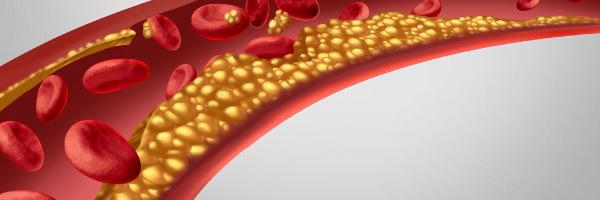
Cholesterol particles pass through arteries constantly without incident. Atherosclerosis begins when the road deteriorates and conditions encourage plaque.
Inflammation makes the endothelium sticky. It oxidizes particles. It traps ApoB-containing lipoproteins and invites immune cells to overreact, turning routine traffic into chronic obstruction.
Insulin resistance, visceral fat, chronic infection, autoimmune activity, poor sleep, toxins, and stress all damage infrastructure. In a healthy system, even heavy traffic may flow. In an inflamed system, a modest increase becomes a disaster.
Atherosclerosis is not a cholesterol storage problem. It is a recurring inflammatory traffic accident.
Putting It Together
If you are a patient of mine, there is a good chance you’ve heard this description and put up with my impromptu artery sketches. And you’ve probably been encouraged to get a carotid artery ultrasound so we know if you are making plaque. The leading cause of death in our country is artery disease, so I spend a lot of time on this topic. We can do much, much better in helping our patients by uncovering the real chemical culprits behind artery disease and this leads to more targeted interventions and a real clean up of the lipid highway.
Cardiovascular risk is not about a single number. It is about how many trucks are on the road, how they’re built, whether some are defective or burning, how conditions encourage a pile up and whether the highway is quietly falling apart beneath them.
Once you see lipids this way, the contradictions disappear. Statins reduce events because they reduce traffic. Lifestyle matters because it repairs infrastructure. Inflammation matters because it determines whether a passing truck becomes a permanent roadblock.
The goal is not to eliminate cholesterol. The goal is to restore flow.
Author
Scott Rollins, MD, is Board Certified with the American Board of Family Practice and the American Board of Anti-Aging and Regenerative Medicine. He specializes in bioidentical hormone replacement for men and women, thyroid and adrenal disorders, fibromyalgia and other complex medical conditions. He is founder and medical director of the Integrative Medicine Center of Western Colorado (www.imcwc.com) and Bellezza Laser Aesthetics (www.bellezzalaser.com). Call (970) 245-6911 for an appointment or more information.
