
A patient guide to understanding, treating, and preventing flares
What is perioral dermatitis?
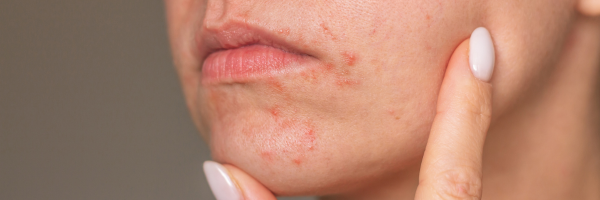
Perioral dermatitis is a common inflammatory skin condition that causes small red bumps, irritation, and sometimes burning or tightness around the mouth. Despite the name, it can also affect the nose, chin, and areas around the eyes.
It is not acne, not an infection, and not contagious—but it often behaves like a stubborn rash that flares when the skin barrier is disrupted.
What does it look and feel like?
Common features include:
- Red or pink bumps (papules), sometimes with tiny pustules
- A clear zone immediately next to the lips (classic clue)
- Dryness, scaling, or rough texture
- Burning, stinging, or “sunburned” sensation
Symptoms that worsen with creams, cosmetics, or topical steroids. It may look mild at first and then worsen unpredictably.
What causes perioral dermatitis?
There is no single cause. Most cases result from a combination of skin barrier disruption and immune overreaction.
Common triggers include:
- Topical steroid use (most common)
- Prescription steroid creams
- Over-the-counter hydrocortisone
- Steroid nasal sprays or inhalers contacting facial skin
Steroids often make it look better briefly—then rebound inflammation occurs, often worse than before.
- Overuse of skincare products
- Heavy moisturizers or occlusive creams
- Anti-aging products
- Multiple layered products
- Essential oils or fragranced products
More skincare is not better for this condition.
- Toothpaste and oral products
- Fluoridated toothpaste
- Whitening agents
- Strong flavorings (mint, cinnamon)
- Hormonal and systemic factors
- Hormonal fluctuations
- Stress
- Underlying inflammatory or autoimmune tendencies
- Gut or microbiome imbalance (in some patients)
- Environmental irritation
- Cold, dry air
- Heat and sweating
- Mask friction
- Wind and sun exposure
Why steroid creams make it worse
Topical steroids:
- Suppress inflammation short-term
- Damage the skin barrier over time
- Disrupt local immune balance
When stopped, the skin often rebounds with more inflammation, which can trap patients in a cycle of dependence. This is why gradual discontinuation and patience are critical.
How is perioral dermatitis treated?
Treatment focuses on removing triggers, calming inflammation, and restoring the skin barrier.
- Stop triggering products (the “zero therapy” phase)
For many patients, this is the most important step.
Temporarily stop:
- Topical steroids (under medical guidance)
- Heavy creams and cosmetics
- Anti-aging products
- Scrubs, acids, and retinoids
Use only:
- Lukewarm water or a very gentle cleanser
- A minimal, non-irritating moisturizer if needed
Expect a temporary worsening for 1–3 weeks after stopping steroids—this is common and expected.
- Prescription treatments (if needed)
Your clinician may prescribe:
- Topical anti-inflammatory or antibiotic agents
- Oral medications for moderate or persistent cases
These are used to reset inflammation, not because the condition is infectious.
- Skin barrier repair
Once inflammation settles:
- Use simple, fragrance-free product
- Avoid occlusive or “rich” creams
- Introduce products one at a time
What to avoid during recovery
- Topical steroids unless specifically directed
- Heavy makeup or full-coverage foundations
- “Natural” products with essential oils
- Frequent product switching
- Aggressive exfoliation
- Overwashing
Healing is slower when the skin is constantly challenged.
How long does it take to improve?
- Early improvement: 2–4 weeks
- Significant clearing: 6–12 weeks
- Full barrier recovery: several months
Relapses can occur, especially if triggers return—but they are usually milder and easier to treat once recognized early.
When to contact your clinician
Seek follow-up if:
- Symptoms worsen rapidly
- There is significant pain, crusting, or swelling
- The rash spreads to the eyes
- No improvement after several weeks of treatment
- You are dependent on steroid creams to control symptoms
Key takeaways
Perioral dermatitis is inflammatory, not infectious
Steroid creams often cause or perpetuate the condition
Less skincare is usually better
Patience is essential—healing is not instant
With proper management, long-term control is very achievable
Perioral dermatitis can be frustrating and emotionally distressing, but it is treatable and reversible. Once the skin barrier is restored and triggers are identified, most patients regain clear, comfortable skin and learn how to prevent future flares.
If you have questions about your specific treatment plan or products, ask—individual guidance matters with this condition.
Author
Scott Rollins, MD, is Board Certified with the American Board of Family Practice and the American Board of Anti-Aging and Regenerative Medicine. He specializes in bioidentical hormone replacement for men and women, thyroid and adrenal disorders, fibromyalgia and other complex medical conditions. He is founder and medical director of the Integrative Medicine Center of Western Colorado (www.imcwc.com) and Bellezza Laser Aesthetics (www.bellezzalaser.com). Call (970) 245-6911 for an appointment or more information.
