
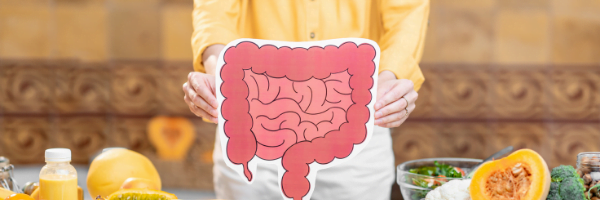
A Practical Guide to Keeping the Colon Calm
Diverticulitis often develops when pressure builds inside the colon and small pouches (diverticula) become inflamed. Prevention is less about a single fix and more about creating a stable, low-pressure, low-inflammation gut environment.
Build Better Stool with Fiber
Aim for 25–35 grams of fiber daily from real foods. Fiber softens stool and reduces pressure in the colon.
Aim for a mix of soluble and insoluble fiber:
- Soluble (oats, chia, flax, legumes) helps form a gel and feeds the microbiome
- Insoluble (vegetables, whole grains) adds bulk and speeds transit
Tip: Increase fiber slowly over 2–3 weeks to avoid bloating.
Hydrate Consistently
Fiber only works if you are well hydrated. Water keeps stool soft and easy to pass. Aim for 6–8+ glasses daily (more with fiber or exercise). Urine should be light yellow
Keep the Gut Moving
Regular bowel movements reduce pressure and risk of flare.
Support motility with:
- Daily walking or exercise
- Consistent meal timing
- Magnesium (if needed, under guidance)
Support a Healthy Microbiome
There’s increasing evidence that dysbiosis plays a role in diverticular disease and flares. A diverse, resilient microbiome seems protective.
Ways to cultivate that:
- Fermented foods (yogurt, kefir, sauerkraut, kimchi)
- Polyphenol-rich foods (berries, olive oil, green tea)
- Prebiotic fibers (garlic, onions, asparagus, leeks)
A diverse gut microbiome may reduce inflammation and flare risk.
If using a probiotic get a broad spectrum and rotate periodically. Include saccharomyces boulardii. Sometimes we’ll do advance stool studies to analyze the microbiome.
Eat an Anti-Inflammatory Diet
Lowering baseline inflammation helps protect the colon.
Focus on:
- Mediterranean-style eating
- Healthy fats (olive oil, nuts, fish)
- Whole, unprocessed foods
Limit:
- Excess red meat
- Ultra-processed foods
- Added sugars
Supplements such as L-Glutamine or Colostrum powder can help lower inflammation in the gut. Sometimes eliminating delayed food allergens is helpful.
Nuts, Seeds, and Popcorn
These were once thought to trigger flares. Current evidence does NOT support avoiding them. Most people tolerate them well and they can be beneficial.
Manage Stress and Sleep
Stress affects gut function and inflammation.
Helpful habits:
- Good sleep (7–8 hours)
- Time outdoors
- Breathing, relaxation, or mindfulness practices
Maintain a Healthy Weight
Excess abdominal fat is linked to higher flare risk. Improving metabolic health supports long-term gut stability.
At the First Sign of a Flare
If you feel early symptoms (mild pain, pressure, or change in bowel habits):
- Shift temporarily to a low-fiber / low-residue diet
- Increase fluids
- Rest the gut
Seek medical care if symptoms worsen, persist, or include fever.
Bottom Line
Consistent daily habits matter more than quick fixes:
- Eat fiber-rich whole foods
- Stay well hydrated
- Keep bowel movements regular
- Support your gut microbiome
- Reduce inflammation and stress
A calm colon is built slowly—but it’s remarkably responsive to the right environment.
Author
Scott Rollins, MD, is Board Certified with the American Board of Family Practice and the American Board of Anti-Aging and Regenerative Medicine. He specializes in bioidentical hormone replacement for men and women, thyroid and adrenal disorders, fibromyalgia and other complex medical conditions. He is founder and medical director of the Integrative Medicine Center of Western Colorado (www.imcwc.com) and Bellezza Laser Aesthetics (www.bellezzalaser.com). Call (970) 245-6911 for an appointment or more information.
