
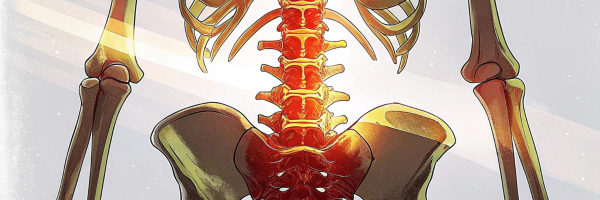
For decades, the exercise advice given to people with osteoporosis has sounded something like this. Be careful. Don’t lift anything too heavy. Avoid impact. And whatever you do, don’t fall.
The advice was understandable. Osteoporosis makes bones more fragile, and fragile things should presumably be handled gently. That’s how we treat antique china. The trouble is, bone isn’t china.
Bone is living tissue. It is constantly sensing the forces placed upon it, tearing itself down, rebuilding itself and adapting to the demands of its environment. And increasingly, research suggests that one of the things an aging skeleton desperately needs is not simply protection. It needs a reason to remain strong.
That is the idea behind an Australian exercise program called ONERO®, now being offered here in Grand Junction by my colleague, Coby Jones, DPT, at Max PT.
And the research behind it is fascinating.
Bone Likes a Challenge
Most people understand that muscles respond to resistance training. Lift something heavy enough, recover, repeat the process, and muscle adapts by becoming stronger. Bone responds to mechanical loading too.
Specialized cells called osteocytes function partly as mechanical sensors. When bone experiences sufficient strain, those signals influence bone remodeling and formation. But there’s a catch. The load has to be substantial enough to get bone’s attention.
Walking is wonderful exercise. I recommend it enthusiastically for cardiovascular health, glucose metabolism, mood, mobility and about a dozen other reasons. But walking isn’t particularly good at building bone.
Neither, unfortunately, are the little pink dumbbells that have traditionally been handed to many women after an osteoporosis diagnosis.
Bone is remarkably unimpressed by our good intentions.
Researchers have therefore become increasingly interested in high-intensity resistance and impact training, or HiRIT, meaning carefully controlled heavy resistance exercise combined with brief impact loading.
That sounds like exactly what someone with osteoporosis shouldn’t do. Which is why the research is so interesting.
The LIFTMOR Study
The landmark study behind ONERO was the LIFTMOR trial, Lifting Intervention For Training Muscle and Osteoporosis Rehabilitation.
Researchers enrolled 101 postmenopausal women, average age about 65, who had osteopenia or osteoporosis. Half performed a conventional low-intensity home exercise program.
The others did something rather different. Twice a week, for approximately 30 minutes, they performed supervised high-intensity resistance and impact training, including exercises such as deadlifts, squats and overhead presses. Resistance progressed to greater than 85% of their one-repetition maximum.
In other words, they weren’t pretending to lift weights. They were lifting weights.
After eight months, lumbar-spine bone mineral density in the high-intensity group had increased by 2.9%. The low-intensity group lost 1.2%.
At the femoral neck, the high-intensity group essentially maintained or slightly increased bone density, while the control group lost approximately 1.9%.
Strength and physical function improved substantially as well. Those aren’t trivial findings.
A skeleton that would ordinarily be expected to slowly lose bone instead received a biological message, “We still need this stuff”.
But Isn’t Heavy Lifting Dangerous With Osteoporosis?
That is the obvious question. The answer requires one enormously important word: Supervision.
There was only one minor adverse event in the original LIFTMOR trial, a transient low-back muscle spasm, and no training-related fractures. Compliance was an impressive 92%.
Researchers subsequently examined the participants’ spines specifically because of concerns that heavy loading might cause vertebral compression fractures. It didn’t.
After eight months, the high-intensity group demonstrated no new vertebral fractures attributable to the program, and thoracic kyphosis (the forward bending) actually improved.
That does not mean someone with osteoporosis should read this article, wander into the garage and see what he or she can deadlift. Please don’t.
The participants were screened, taught proper technique, progressively loaded and closely supervised. That distinction is everything.
ONERO itself requires an initial health assessment and is designed to be delivered under the supervision of an accredited practitioner.
More Than a Better DXA Scan
There is another reason I find this approach so appealing.
When treating osteoporosis, we understandably focus on the DXA scan. But bones generally don’t fracture spontaneously while sitting peacefully on the couch. People fall. So preventing fractures involves much more than increasing bone mineral density.
We need stronger legs. Better balance. Better posture. Faster reactions. Greater confidence. Enough muscle to catch ourselves when gravity suddenly renegotiates the contract.
The LIFTMOR participants improved not only bone density but also measures of leg and back strength, sit-to-stand performance, mobility and functional reach.
Research in men has produced similarly encouraging findings, with high-intensity resistance and impact training improving or preserving important measures of bone geometry and strength.
And the concept isn’t supported by LIFTMOR alone. A meta-analysis of nine randomized trials found that high-load resistance training significantly improved bone density at the lumbar spine, femoral neck and total hip in people with osteopenia or osteoporosis.
So this is becoming less of a provocative idea and more of a legitimate shift in how we think about exercise and aging bone.
Exercise and Medication Aren’t Enemies
None of this means exercise replaces osteoporosis medication when medication is indicated.
For someone at high fracture risk, hormone replacement therapy or medications may dramatically reduce fracture risk. But I think we’ve sometimes created a false choice, “Medication or exercise”?
Why not both?
The MEDEX-OP trial examined bone-targeted high-intensity exercise both with and without medication. The results support the idea that pharmacologic treatment and mechanical loading can be complementary rather than competing approaches.
Medication changes the biology of bone remodeling. Exercise gives the skeleton a reason to use that biology.
ONERO Comes to Grand Junction
This is where the story becomes local.
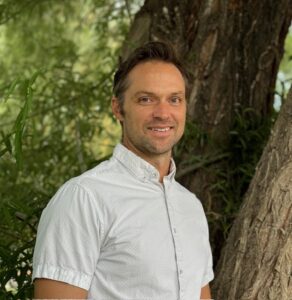 My colleague, Coby Jones, DPT, owner of Max PT in Grand Junction, is now offering the ONERO program locally.
Coby is a physical therapist, which is particularly important here because ONERO isn’t simply a collection of exercises downloaded from the internet. The official program requires supervision by an appropriately trained practitioner and begins with an assessment so that exercises can be adapted to the individual.
That is exactly how I want a patient with osteoporosis approaching heavy resistance training. Not fearfully. Not recklessly. Intelligently.
Someone with severe osteoporosis, previous vertebral compression fractures, significant balance problems, arthritis or other musculoskeletal limitations may require substantial modification. The objective isn’t to prove how much weight you can lift.
The objective is to safely provide enough mechanical stimulus to convince muscle and bone that they are still very much needed.
For years, we’ve treated aging as though the human body were slowly becoming a museum exhibit. Please don’t touch.
But human physiology doesn’t work particularly well that way. Muscle needs resistance. The cardiovascular system needs exertion. Balance needs challenging. And bone needs loading.
The better message for someone diagnosed with osteopenia or osteoporosis isn’t simply, “Be careful”. It should be, “Become stronger”.
And now, fortunately, we have increasingly good science showing us how to do exactly that.
Author
Scott Rollins, MD, is Board Certified with the American Board of Family Practice and the American Board of Anti-Aging and Regenerative Medicine. He specializes in bioidentical hormone replacement for men and women, thyroid and adrenal disorders, fibromyalgia and other complex medical conditions. He is founder and medical director of the Integrative Medicine Center of Western Colorado (www.imcwc.com) and Bellezza Laser Aesthetics (www.bellezzalaser.com). Call (970) 245-6911 for an appointment or more information.
